


Doctor App Development: How to Build a Modern Doctor Appointment and Consultation Platform
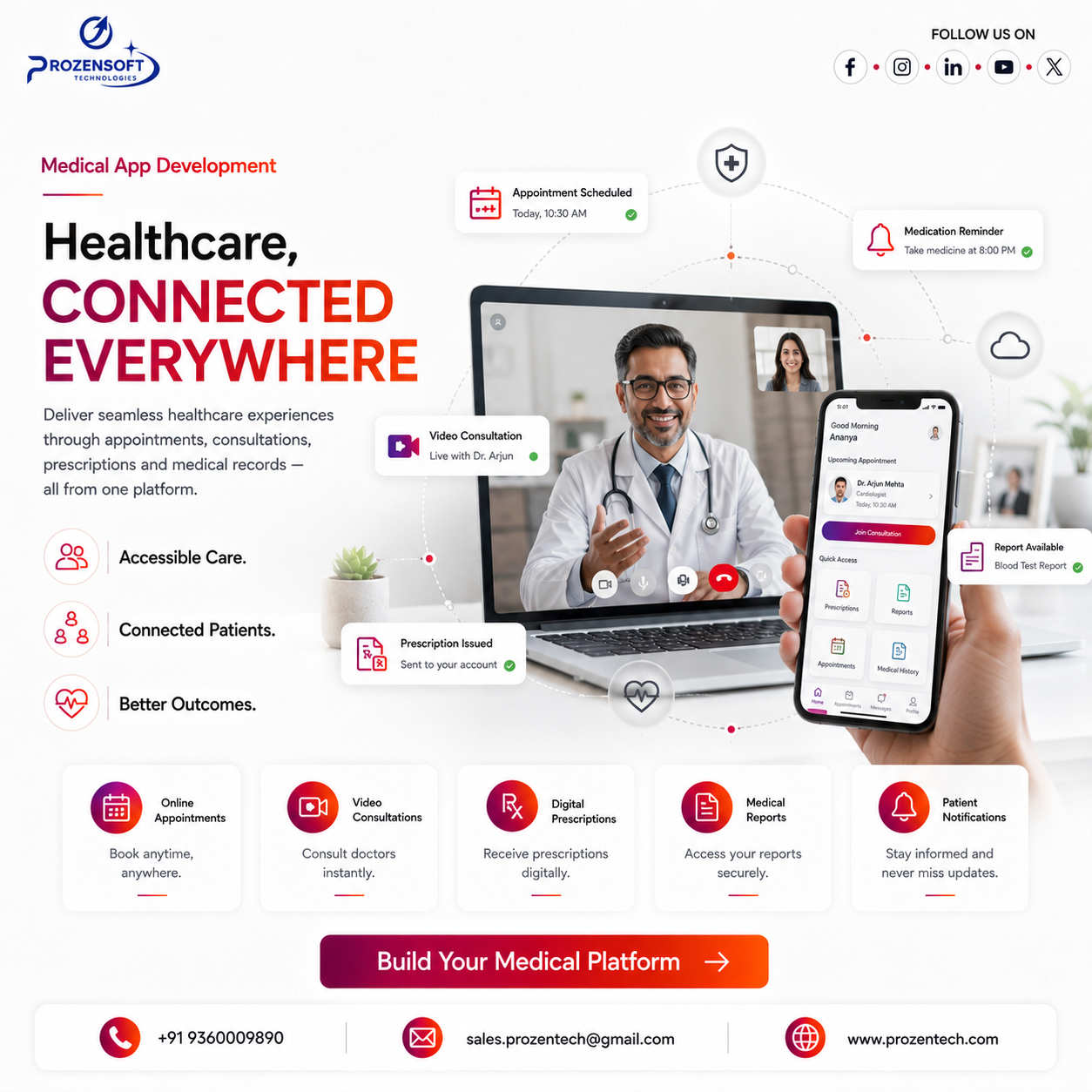
The way patients find doctors and access healthcare services is changing rapidly. Traditional appointment booking often involves phone calls, waiting for confirmation, unclear doctor availability, and unnecessary administrative work for both patients and healthcare providers.
Modern patients expect a simpler digital experience.
They want to search for doctors by specialty, view professional profiles, check real-time availability, select a convenient appointment slot, make secure payments, receive reminders, and even attend video consultations directly from their smartphones.
For hospitals, clinics, independent doctors, medical groups, and healthcare startups, professional doctor app development can create a powerful digital connection between patients and healthcare providers.
A well-designed doctor application can simplify appointment scheduling, reduce administrative workload, improve patient communication, support remote consultations, and provide doctors with better tools to manage their availability and appointments.
However, building a successful doctor app requires more than creating a calendar and booking button. The platform needs reliable scheduling logic, secure authentication, patient and doctor profiles, payments, notifications, video consultation functionality, role-based access, and careful protection of sensitive information.
This guide explains how doctor apps work, essential features, different business models, development costs, security considerations, and how to build a scalable doctor appointment and consultation platform.
What Is Doctor App Development?
Doctor app development is the process of creating mobile and web applications that connect patients with doctors for healthcare-related services.
Depending on the business model, a doctor app may allow patients to:
- Search for doctors
- Explore medical specialties
- View doctor profiles
- Check available appointment slots
- Book consultations
- Make online payments
- Join video consultations
- Receive appointment reminders
- Access prescriptions
- Manage appointment history
Doctors may use a dedicated application to:
- Manage their profiles
- Configure availability
- View appointments
- Access authorized patient information
- Conduct video consultations
- Manage appointment statuses
- Create prescriptions
- Track consultation history
A complete doctor app ecosystem may include a patient app, doctor app, hospital or clinic dashboard, backend infrastructure, and admin panel.
Why Are Hospitals and Clinics Investing in Doctor Appointment Apps?
Manual appointment management can create several challenges.
Patients may need to repeatedly call reception desks to ask about availability. Staff may spend significant time coordinating appointments. Schedule changes can create confusion. Patients may miss consultations because they do not receive timely reminders.
A doctor appointment app can help solve these problems by providing a centralized digital booking experience.
Potential benefits include:
- 24/7 online appointment booking
- Real-time doctor availability
- Reduced manual scheduling
- Automated appointment reminders
- Easier rescheduling and cancellation
- Online consultation support
- Secure payment processing
- Better patient communication
- Centralized appointment history
- Multi-doctor management
- Multi-branch support
For healthcare startups, a doctor booking app can also create a marketplace connecting patients with healthcare professionals across different specialties and locations.
How Does a Doctor Appointment App Work?
A typical doctor app journey can be simple for the patient while handling complex scheduling and healthcare workflows behind the scenes.
Step 1: Patient Creates an Account
The patient registers through available authentication methods such as phone number, email, or OTP verification.
A secure patient profile is then created.
Step 2: Patient Searches for a Doctor
Patients may search using:
- Doctor name
- Specialty
- Hospital
- Clinic
- Location
- Availability
- Consultation type
- Consultation fee
Filters can help patients find suitable healthcare providers more quickly.
Step 3: Patient Views the Doctor Profile
The doctor profile may include:
- Doctor name
- Profile photo
- Medical specialty
- Qualifications
- Years of experience
- Languages spoken
- Associated hospitals or clinics
- Consultation types
- Consultation fees
- Available time slots
This helps patients make a more informed booking decision.
Step 4: Patient Selects an Appointment Slot
The patient chooses an available date and time.
The platform should immediately update availability and prevent overlapping bookings.
Step 5: Patient Chooses the Consultation Type
Depending on the doctor and healthcare organization, patients may choose:
- In-person consultation
- Video consultation
- Audio consultation
- Follow-up appointment
Step 6: Patient Makes Payment
If advance payment is required, the patient completes payment through an integrated payment gateway.
Step 7: Appointment Is Confirmed
Both patient and doctor receive appointment confirmation.
Step 8: Consultation Takes Place
For in-person appointments, the patient visits the clinic or hospital.
For online consultations, the patient and doctor join a secure video session at the scheduled time.
Step 9: Follow-Up Information Is Shared
Depending on platform functionality, the doctor may provide:
- Prescription
- Consultation notes
- Follow-up recommendations
- Next appointment date
This complete digital journey can significantly simplify healthcare access.
Essential Features for a Patient App
The patient-facing application should make doctor discovery and appointment booking easy.
Important features may include:
- Secure registration
- OTP login
- Patient profile
- Family profiles
- Doctor search
- Specialty search
- Hospital and clinic discovery
- Doctor profiles
- Availability calendar
- Appointment slot selection
- In-person appointment booking
- Video consultation booking
- Secure payments
- Appointment confirmation
- Rescheduling
- Cancellation
- Appointment reminders
- Appointment history
- Prescription access
- Medical document upload
- Favourite doctors
- Ratings and feedback
- Multi-language support
- Patient support
The best patient experiences minimize unnecessary steps between finding a doctor and confirming an appointment.
Essential Doctor App Features
Doctors need a focused interface that helps them manage professional activities without unnecessary complexity.
Important features may include:
- Secure doctor login
- Doctor profile management
- Qualification information
- Document verification
- Specialty management
- Hospital and branch associations
- Consultation fee management
- Availability settings
- Appointment calendar
- Upcoming appointments
- Patient information
- Appointment status updates
- Video consultations
- Prescription creation
- Consultation history
- Earnings overview
- Notifications
- Support
Doctors working across multiple hospitals or branches may also require location-specific schedules and consultation fees.
Powerful Admin Panel for Doctor Appointment Platforms
The admin dashboard acts as the operational control centre of the doctor booking platform.
Administrators may manage:
- Patients
- Doctors
- Hospitals
- Clinics
- Branches
- Medical specialties
- Doctor verification
- Qualifications
- Doctor availability
- Appointment slots
- Bookings
- Payments
- Refunds
- Consultation types
- Notifications
- Ratings
- Support requests
- Reports
- Revenue analytics
- User roles and permissions
A well-designed admin dashboard can reduce operational complexity and provide better visibility across the healthcare platform.
Doctor Appointment Scheduling System
Scheduling is one of the most important components of doctor app development.
A reliable appointment engine should consider:
- Doctor working days
- Start and end times
- Appointment duration
- Break periods
- Existing appointments
- Doctor leave
- Hospital branch
- Consultation type
- Time zone where applicable
For example, if a doctor is available from 9:00 AM to 12:00 PM with 15-minute appointments, the platform can automatically generate valid time slots while excluding already booked periods.
If the same doctor works at different hospitals, availability should be coordinated carefully to avoid scheduling conflicts.
Real-Time Doctor Availability
Patients should see accurate availability before selecting an appointment.
The system can update slots based on:
- Existing bookings
- Doctor schedule changes
- Leave
- Appointment cancellations
- Branch-specific availability
Real-time availability can reduce failed bookings and unnecessary communication with clinic staff.
Multi-Hospital and Multi-Branch Doctor App Development
Doctors may work across multiple healthcare facilities.
For example, one specialist might consult at:
- Hospital A on Monday and Wednesday
- Clinic B on Tuesday
- Hospital C on Friday
Each location may have different:
- Consultation hours
- Appointment duration
- Consultation fees
- Services
- Administrative teams
A scalable doctor application should support these relationships without creating scheduling conflicts.
This is particularly important for healthcare networks and doctor marketplaces.
Telemedicine and Video Consultation Features
Video consultations allow patients and doctors to connect remotely.
A doctor consultation app may support:
- Scheduled video appointments
- Secure meeting access
- Patient verification
- Doctor verification
- Virtual waiting room
- Call notifications
- Consultation start and end states
- Follow-up scheduling
Telemedicine can improve healthcare access for remote patients, follow-up consultations, and situations where physical examination is not required.
Healthcare providers should ensure that remote consultation services comply with relevant professional and legal requirements.
Online Doctor Consultation App Development
An online doctor consultation platform can connect patients with healthcare professionals without requiring every interaction to take place physically.
Potential functionality includes:
- Doctor discovery
- Instant or scheduled consultation
- Video calling
- Audio consultation
- Secure chat
- Prescription management
- Payments
- Consultation history
- Notifications
The exact workflow should depend on the healthcare service and target market.
Not every healthcare condition is suitable for remote consultation, so the platform should clearly communicate the limitations of online care where appropriate.
Doctor Profile and Verification System
Trust is critical in healthcare.
Doctor profiles can display verified professional information such as:
- Full name
- Profile image
- Medical specialty
- Qualifications
- Professional experience
- Languages
- Associated hospitals
- Registration details where appropriate
- Consultation fees
The platform may require administrators to review uploaded documents before activating a doctor's account.
This verification workflow can help maintain platform quality and user trust.
Secure Payment Integration for Doctor Apps
Healthcare applications may accept payments for:
- In-person appointments
- Video consultations
- Follow-up consultations
- Healthcare packages
Depending on the market, payment methods can include:
- Credit cards
- Debit cards
- Digital wallets
- Local payment gateways
The platform may also need to manage:
- Successful payments
- Failed transactions
- Refunds
- Partial refunds
- Cancellation policies
- Doctor earnings
- Platform commissions
The payment architecture should match the business model and applicable regional requirements.
Doctor Earnings and Platform Commission
For doctor marketplace platforms, the system may track financial transactions between patients, doctors, and the platform.
For example:
Patient Payment → Platform Fee → Doctor Earnings
The platform can support:
- Fixed commission
- Percentage commission
- Different commissions by doctor
- Different commissions by specialty
- Transaction records
- Doctor earnings reports
- Settlement tracking
The exact financial structure should be defined clearly before development.
Electronic Prescription Features
Depending on applicable laws and healthcare requirements, doctors may be able to create digital prescriptions after consultations.
A prescription system can support:
- Medication name
- Dosage
- Frequency
- Duration
- Instructions
- Doctor notes
- Prescription date
Patients may be able to securely access or download authorized prescriptions.
Electronic prescription features should be developed according to relevant medical and legal requirements.
Medical Document Upload and Management
Patients may need to upload documents before consultations.
Examples include:
- Lab reports
- Previous prescriptions
- Medical images
- Referral letters
- Discharge summaries
Doctors should only access patient information when appropriately authorized.
The platform should clearly define:
- Who can upload files
- Who can access them
- How long access remains available
- How files are securely stored
- How access is revoked
Healthcare data should be protected throughout its lifecycle.
Push Notifications and Appointment Reminders
Automated reminders can improve communication and reduce missed appointments.
Notifications may be sent for:
- Booking confirmation
- Upcoming appointment
- Appointment rescheduled
- Appointment cancelled
- Payment confirmation
- Video consultation ready
- Prescription available
- Follow-up reminder
Depending on the platform, notifications may use push notifications, SMS, or email.
Sensitive healthcare details should not be unnecessarily exposed in notification previews.
Doctor App Security and Patient Privacy
Doctor applications may handle sensitive healthcare information, making security particularly important.
Key security measures may include:
- Secure authentication
- Encrypted data transmission
- Protected APIs
- Role-based access
- Server-side authorization
- Secure session management
- Token protection
- Data minimization
- Secure document access
- Activity logs where appropriate
- Backup and recovery planning
- Regular dependency updates
Doctors, patients, administrators, and clinic staff should only have access to information necessary for their authorized roles.
Security should be part of the platform architecture from the beginning.
Healthcare Compliance for Doctor Apps
The regulations applying to a doctor application depend on:
- Country
- Region
- Type of healthcare service
- Type of data processed
- Telemedicine model
- Payment model
- Data storage location
Potential regulatory areas may include:
- Patient privacy
- Health information security
- User consent
- Data retention
- Telemedicine
- Electronic prescriptions
- Healthcare professional verification
Businesses should identify applicable requirements early and obtain qualified legal or compliance advice where necessary.
Doctor App Development for Clinics
Clinics can use doctor appointment applications to simplify:
- Patient bookings
- Doctor schedules
- Appointment reminders
- Payments
- Follow-up appointments
- Video consultations
- Patient communication
A clinic does not necessarily need an overly complex healthcare platform. The best solution should match the actual size and workflow of the organization.
Doctor App Development for Hospitals
Hospitals may require more advanced functionality, including:
- Multiple departments
- Multiple specialties
- Multiple doctors
- Multiple branches
- Branch-specific schedules
- Different consultation fees
- Role-based administration
- Centralized reporting
The application can create a unified digital patient journey across the healthcare organization.
Doctor Marketplace App Development
A doctor marketplace connects patients with healthcare professionals across multiple specialties, locations, hospitals, or clinics.
The platform may generate revenue through:
- Commission per appointment
- Doctor subscriptions
- Featured doctor profiles
- Platform service fees
- Healthcare memberships
Marketplace success depends not only on technology but also on doctor onboarding, patient trust, service quality, and local regulations.
Multi-Language Doctor App Development
Healthcare platforms targeting diverse communities may need multiple languages.
A multilingual app can help users:
- Navigate in their preferred language
- Understand appointment details
- Receive localized notifications
- Access region-specific content
Right-to-left languages can also be supported when required.
Translation quality is particularly important in healthcare because unclear information can create misunderstandings.
How Much Does Doctor App Development Cost?
The cost of doctor app development depends on the required functionality and complexity.
Major cost factors include:
- Patient app
- Doctor app
- Admin dashboard
- Hospital or clinic panel
- Appointment scheduling
- Video consultations
- Payment gateway
- Prescription functionality
- Medical documents
- Multi-hospital support
- Number of user roles
- Multi-language functionality
- Security requirements
- Third-party integrations
A basic appointment booking app will cost less than a complete multi-hospital telemedicine ecosystem with video consultations, complex scheduling, payments, medical documents, and multiple administrative roles.
A clear feature scope is necessary for an accurate estimate.
How Long Does It Take to Develop a Doctor App?
Development time depends on complexity.
A typical process includes:
- Business requirement analysis
- Healthcare workflow research
- Feature planning
- User journey creation
- UI/UX design
- Patient app development
- Doctor app development
- Backend development
- Admin dashboard development
- Video consultation integration
- Payment integration
- Security testing
- Quality assurance
- Deployment
Complex healthcare applications require sufficient testing and should not be rushed simply to achieve an unrealistic launch date.
How to Choose the Best Doctor App Development Company
Doctor applications require expertise in mobile development, healthcare workflows, appointment scheduling, real-time communication, security, and scalable backend systems.
Before selecting a doctor app development company, ask:
- Can they build both patient and doctor apps?
- Do they understand appointment scheduling?
- Can the platform support multiple hospitals and branches?
- Can doctors have different fees at different locations?
- Can video consultations be integrated?
- How is patient information protected?
- Can secure payments be integrated?
- Is an admin dashboard included?
- Can the platform scale?
- Is post-launch support available?
A strong development partner should understand both the technical and operational complexity of digital healthcare.
Common Mistakes to Avoid in Doctor App Development
Businesses should avoid:
- Building without clear healthcare workflows
- Creating complicated appointment journeys
- Ignoring scheduling conflicts
- Treating security as an afterthought
- Giving excessive access to patient data
- Adding unnecessary features
- Ignoring accessibility
- Skipping real-world testing
- Neglecting appointment reminders
- Launching without a maintenance strategy
The best doctor apps focus on simplicity, trust, reliability, security, and clear healthcare workflows.
Frequently Asked Questions About Doctor App Development
What is doctor app development?
Doctor app development is the process of building digital applications that connect patients and doctors for appointment booking, schedule management, video consultations, payments, prescriptions, and other healthcare services.
What apps are required for a doctor booking platform?
A complete ecosystem may include a patient app, doctor app, hospital or clinic dashboard, admin panel, and backend infrastructure.
Can patients book appointments online?
Yes. Patients can search for doctors, view available slots, select consultation types, make payments where required, and receive booking confirmation.
Can doctors manage their own schedules?
Yes. Doctors or authorized administrators can manage working days, availability, breaks, leave, appointment duration, and branch-specific schedules.
Can the app support video consultations?
Yes. Secure video consultation functionality can be integrated for scheduled online appointments.
Can one doctor work at multiple hospitals?
Yes. A scalable platform can associate one doctor with multiple hospitals or branches and support different schedules and consultation fees for each location.
Can patients upload medical documents?
Yes. Patients can securely upload authorized documents such as reports and previous prescriptions where the platform supports this functionality.
How much does doctor app development cost?
The cost depends on the number of applications, scheduling complexity, video consultation functionality, payments, medical records, security requirements, integrations, and platform scale.

 Arabic
 French
 Spanish
 Portuguese
 Deutsch
 Turkish
 Dutch
Dutch
 Italiano
 Russian
 Romaian
 Portuguese (Brazil)
 Greek
Greek