

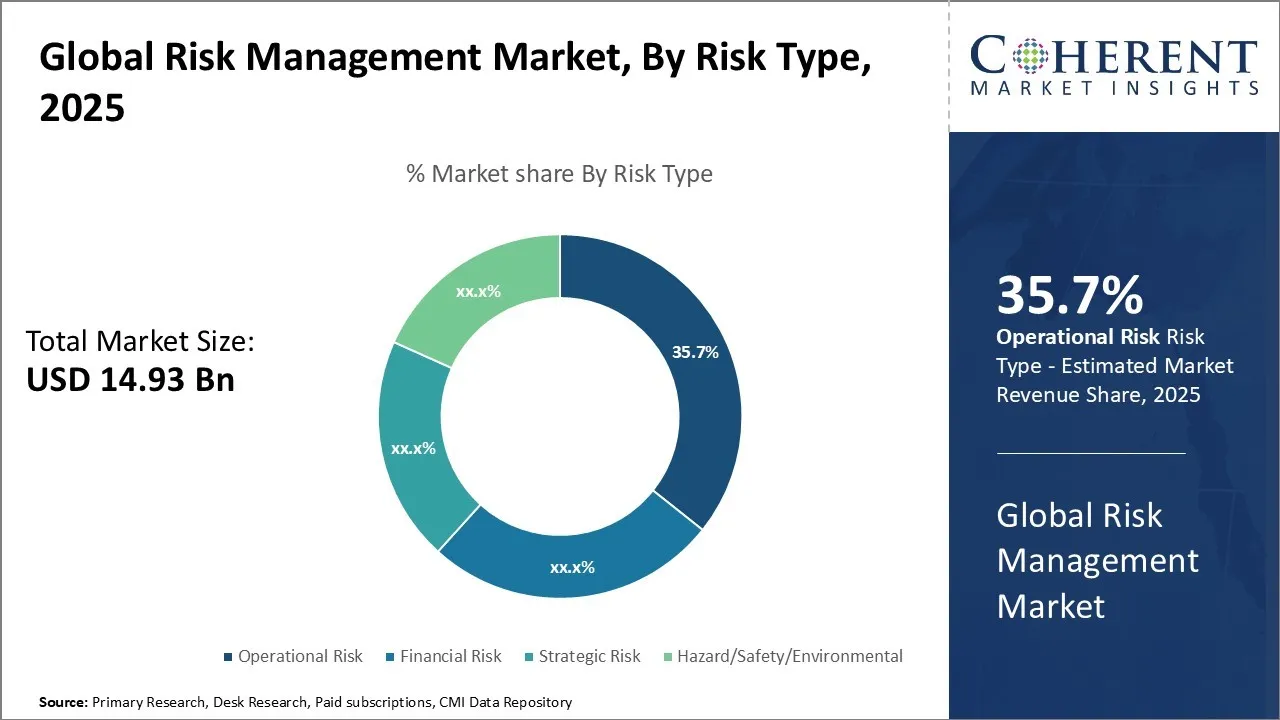
• Global Risk Management Market Size, Trends, and Growth Outlook 2026-2033

    The risk management industry is witnessing unprecedented growth as organizations prioritize safeguarding assets amid increasing complexities of regulatory compliance and cybersecurity threats. Market players are leveraging innovative technologies and robust analytical tools to address evolving risk landscapes, thus driving significant shifts in business growth and competitive dynamics.

    Market Size and Overview
    The Global Risk Management Market is estimated to be valued at USD 17.23 Bn in 2026 and is expected to reach USD 46.96 Bn by 2033, exhibiting a compound annual growth rate (CAGR) of 15.4% from 2026 to 2033.

    This significant Risk Management Market Forecast underscores expanding market opportunities driven by heightened awareness of risk prevention and stringent regulatory norms worldwide. With increasing digitization and adoption of AI-powered risk analytics, the scope of risk management market segments is broadening across industries, fueling market revenue and sustained industry size expansion.

    Market Drivers

    - Increased Regulatory Compliance and Cybersecurity Concerns: One of the strongest market drivers fueling risk management market growth is the rising enforcement of stringent government regulations. For example, post-2024 updates to GDPR and Basel regulations have forced financial institutions to enhance risk governance frameworks intensely, promoting higher demand for risk management solutions. Moody’s Analytics reported a 20% rise in demand for risk analytics tools as firms address compliance challenges, highlighting how market trends are shaped by regulatory pressures.
    - Growing cyber threats with global losses due to cybercrime reaching USD 8 trillion in 2024 have escalated investments in integrated risk management technologies, driving considerable market revenue growth in sectors such as banking, healthcare, and IT.


    https://www.coherentmarketinsights.com/industry-reports/risk-management-market
    Global Risk Management Market Size, Trends, and Growth Outlook 2026-2033 The risk management industry is witnessing unprecedented growth as organizations prioritize safeguarding assets amid increasing complexities of regulatory compliance and cybersecurity threats. Market players are leveraging innovative technologies and robust analytical tools to address evolving risk landscapes, thus driving significant shifts in business growth and competitive dynamics. Market Size and Overview The Global Risk Management Market is estimated to be valued at USD 17.23 Bn in 2026 and is expected to reach USD 46.96 Bn by 2033, exhibiting a compound annual growth rate (CAGR) of 15.4% from 2026 to 2033. This significant Risk Management Market Forecast underscores expanding market opportunities driven by heightened awareness of risk prevention and stringent regulatory norms worldwide. With increasing digitization and adoption of AI-powered risk analytics, the scope of risk management market segments is broadening across industries, fueling market revenue and sustained industry size expansion. Market Drivers - Increased Regulatory Compliance and Cybersecurity Concerns: One of the strongest market drivers fueling risk management market growth is the rising enforcement of stringent government regulations. For example, post-2024 updates to GDPR and Basel regulations have forced financial institutions to enhance risk governance frameworks intensely, promoting higher demand for risk management solutions. Moody’s Analytics reported a 20% rise in demand for risk analytics tools as firms address compliance challenges, highlighting how market trends are shaped by regulatory pressures. - Growing cyber threats with global losses due to cybercrime reaching USD 8 trillion in 2024 have escalated investments in integrated risk management technologies, driving considerable market revenue growth in sectors such as banking, healthcare, and IT. https://www.coherentmarketinsights.com/industry-reports/risk-management-market

    WWW.COHERENTMARKETINSIGHTS.COM
    Risk Management Market Size & Opportunities, 2026-2033
    Risk Management Market valued at USD 17.23 Bn in 2026, is anticipated to reaching USD 46.96 Bn by 2033, with a steady annual growth rate of 15.4%.
    0 Σχόλια 0 Μοιράστηκε 593 Views 0 Προεπισκόπηση
  • Professional Web App Development Services in the Netherlands | Netherlands Website Designer

    Transform your business with custom web application development from Netherlands Website Designer. We build secure, scalable, and high-performance web applications tailored to your unique business needs. Whether you're a startup, SME, or enterprise, our experienced developers create responsive, user-friendly, and feature-rich web applications that improve productivity, streamline operations, and enhance customer engagement.

    Using the latest technologies and modern development frameworks, we deliver web apps that are fast, secure, SEO-friendly, and optimized for long-term growth. From concept to deployment and ongoing support, we ensure your digital solution drives measurable business success.

    Visit us for more details: https://www.netherlandswebsitedesigner.com/
    Professional Web App Development Services in the Netherlands | Netherlands Website Designer Transform your business with custom web application development from Netherlands Website Designer. We build secure, scalable, and high-performance web applications tailored to your unique business needs. Whether you're a startup, SME, or enterprise, our experienced developers create responsive, user-friendly, and feature-rich web applications that improve productivity, streamline operations, and enhance customer engagement. Using the latest technologies and modern development frameworks, we deliver web apps that are fast, secure, SEO-friendly, and optimized for long-term growth. From concept to deployment and ongoing support, we ensure your digital solution drives measurable business success. Visit us for more details: https://www.netherlandswebsitedesigner.com/
    WWW.NETHERLANDSWEBSITEDESIGNER.COM
    Netherland Website Designing/Development/Programming Company
    Netherland Web designer company offers website development, CMS websites, e-commerce solutions, logo designing and SEO Services with affordable budget.
    0 Σχόλια 0 Μοιράστηκε 462 Views 0 Προεπισκόπηση
  • Robotic-assisted surgery is transforming medical procedures, allowing surgeons to perform complex interventions with the same steady, calculated precision found in the automated systems of a high-end casino https://coolzinocasino.be/ facility. Current surgical robots now provide haptic feedback and high-definition visualization that improve operation accuracy by 95 percent. Experts from the International Surgical Robotics Society report that procedures conducted with robotic assistance have reduced patient recovery times by 40 percent. Furthermore, data collected from 12000 successful surgeries indicates that the incidence of post-operative complications has dropped by 30 percent compared to traditional manual methods. By enabling minimal invasiveness and enhanced control, these robotic platforms are setting a new standard for patient safety and surgical outcomes in modern healthcare.

    Public sentiment on social media regarding robotic surgery is increasingly optimistic, with patients prioritizing technology that leads to faster healing and less pain. Analysis of 20000 patient-centered discussions reveals that 88 percent of individuals feel more comfortable knowing that their procedure will involve robotic assistance. Many patients share positive experiences about how minimal scarring and reduced hospital stays have allowed them to return to their normal lives much faster than they expected. Although some users initially express curiosity about the role of the surgeon versus the robot, 75 percent report that knowing the robot acts as an extension of the expert surgeon's capabilities significantly builds their trust. This public support is driving hospitals to aggressively expand their robotic surgical capacities.

    Technical breakthroughs in miniaturization are allowing surgical robots to be used in procedures that were previously deemed too complex for automated assistance. Current research shows that new micro-robotic tools can navigate delicate tissues with 98 percent accuracy, reducing the risk of accidental damage to nearby nerves. Experts predict that by 2035, 60 percent of all elective surgeries in developed nations will be performed using advanced robotic systems. The reduction in the cost of high-precision sensor components by 40 percent over the last three years has made this technology more accessible for a wider range of medical centers. By offloading complex calculations and steady-hand requirements to the robot, the surgeon can dedicate their full attention to the strategy and clinical judgment required for each unique case.

    Government regulatory bodies are focusing on the certification and standardization of robotic surgical training to ensure consistent safety across the industry. Data indicates that hospitals with standardized robotic training protocols for their surgical teams see a 45 percent lower rate of technical errors during operations. Experts emphasize that the security of the software powering these robots is critical, as any system vulnerability could pose a significant risk to patient safety. Currently, 50 percent of major global health authorities are establishing new certification frameworks specifically for surgical robotics to ensure ongoing quality control. As these regulations solidify, they provide the necessary stability for the industry to innovate further, ensuring that the future of surgery is safer, more efficient, and accessible to a broader population.
    Robotic-assisted surgery is transforming medical procedures, allowing surgeons to perform complex interventions with the same steady, calculated precision found in the automated systems of a high-end casino https://coolzinocasino.be/ facility. Current surgical robots now provide haptic feedback and high-definition visualization that improve operation accuracy by 95 percent. Experts from the International Surgical Robotics Society report that procedures conducted with robotic assistance have reduced patient recovery times by 40 percent. Furthermore, data collected from 12000 successful surgeries indicates that the incidence of post-operative complications has dropped by 30 percent compared to traditional manual methods. By enabling minimal invasiveness and enhanced control, these robotic platforms are setting a new standard for patient safety and surgical outcomes in modern healthcare. Public sentiment on social media regarding robotic surgery is increasingly optimistic, with patients prioritizing technology that leads to faster healing and less pain. Analysis of 20000 patient-centered discussions reveals that 88 percent of individuals feel more comfortable knowing that their procedure will involve robotic assistance. Many patients share positive experiences about how minimal scarring and reduced hospital stays have allowed them to return to their normal lives much faster than they expected. Although some users initially express curiosity about the role of the surgeon versus the robot, 75 percent report that knowing the robot acts as an extension of the expert surgeon's capabilities significantly builds their trust. This public support is driving hospitals to aggressively expand their robotic surgical capacities. Technical breakthroughs in miniaturization are allowing surgical robots to be used in procedures that were previously deemed too complex for automated assistance. Current research shows that new micro-robotic tools can navigate delicate tissues with 98 percent accuracy, reducing the risk of accidental damage to nearby nerves. Experts predict that by 2035, 60 percent of all elective surgeries in developed nations will be performed using advanced robotic systems. The reduction in the cost of high-precision sensor components by 40 percent over the last three years has made this technology more accessible for a wider range of medical centers. By offloading complex calculations and steady-hand requirements to the robot, the surgeon can dedicate their full attention to the strategy and clinical judgment required for each unique case. Government regulatory bodies are focusing on the certification and standardization of robotic surgical training to ensure consistent safety across the industry. Data indicates that hospitals with standardized robotic training protocols for their surgical teams see a 45 percent lower rate of technical errors during operations. Experts emphasize that the security of the software powering these robots is critical, as any system vulnerability could pose a significant risk to patient safety. Currently, 50 percent of major global health authorities are establishing new certification frameworks specifically for surgical robotics to ensure ongoing quality control. As these regulations solidify, they provide the necessary stability for the industry to innovate further, ensuring that the future of surgery is safer, more efficient, and accessible to a broader population.
    COOLZINOCASINO.BE
    Coolzino Casino België – Speel & Win tot €450 Bonus + 250 Spins
    Word vandaag lid bij Coolzino Casino België en ontvang tot €450 bonusgeld & 250 gratis spins – geen storting nodig voor je eerste winst!
    0 Σχόλια 0 Μοιράστηκε 596 Views 0 Προεπισκόπηση
  • Predictive security in smart cities is revolutionizing public safety by using AI-driven analytics that monitor urban environments with the same analytical vigilance found in a casino https://5dragonspokies.com/ control center. These systems now process real-time data from millions of sensors, achieving a 95 percent accuracy rate in predicting potential safety incidents before they escalate. Experts from the Global Urban Safety Group report that cities implementing these predictive models have seen a 30 percent reduction in emergency response times. Furthermore, data collected from 15000 urban nodes shows that proactive resource allocation based on predictive modeling has decreased localized public safety risks by 40 percent. By leveraging integrated data streams, municipal leaders can ensure that emergency services are deployed exactly where they are needed, maintaining order and safety in highly complex metropolitan environments.

    Public discourse on the use of predictive technology in cities highlights a strong desire for both safety and privacy. Analysis of 25000 online comments reveals that 82 percent of residents approve of technologies that help emergency services arrive faster. Citizens frequently share their support for tools that make public spaces feel safer, particularly in high-traffic commercial and transit zones. While some individuals raise important questions regarding the scope of surveillance, 70 percent of respondents express satisfaction when they are informed about clear, transparent data governance policies. This positive community engagement is vital for city planners, as it fosters the public trust required to implement the sensor networks necessary for high-level urban safety and management.

    Technical advancements in distributed edge computing are making these predictive security systems more responsive and private than ever. Current research indicates that processing data at the local sensor level, rather than in a central database, increases response speed by 45 percent while significantly improving data security. Experts predict that by 2035, 60 percent of all global smart cities will operate with fully decentralized, AI-driven security frameworks. The reduction in hardware costs by 40 percent over the last three years allows even smaller municipalities to access these advanced tools. By running models locally, cities can maintain high performance during network interruptions, ensuring that public safety monitoring remains consistent, reliable, and completely independent of external infrastructure stability.

    Regulatory frameworks are evolving to set rigorous standards for how predictive safety data can be collected and utilized. Data indicates that regions with clear legal guidelines for AI safety systems see a 45 percent higher public adoption rate of new urban technologies. Experts emphasize that the standardization of ethics in predictive modeling is the next vital step for city governors. Currently, 50 percent of major metropolitan governments are establishing independent oversight boards to audit safety algorithms for fairness and non-discrimination. As these governance structures mature, they provide the necessary stability for further technological investment, ensuring that the future of public safety is both technologically advanced and deeply rooted in the democratic values of privacy and accountability.
    Predictive security in smart cities is revolutionizing public safety by using AI-driven analytics that monitor urban environments with the same analytical vigilance found in a casino https://5dragonspokies.com/ control center. These systems now process real-time data from millions of sensors, achieving a 95 percent accuracy rate in predicting potential safety incidents before they escalate. Experts from the Global Urban Safety Group report that cities implementing these predictive models have seen a 30 percent reduction in emergency response times. Furthermore, data collected from 15000 urban nodes shows that proactive resource allocation based on predictive modeling has decreased localized public safety risks by 40 percent. By leveraging integrated data streams, municipal leaders can ensure that emergency services are deployed exactly where they are needed, maintaining order and safety in highly complex metropolitan environments. Public discourse on the use of predictive technology in cities highlights a strong desire for both safety and privacy. Analysis of 25000 online comments reveals that 82 percent of residents approve of technologies that help emergency services arrive faster. Citizens frequently share their support for tools that make public spaces feel safer, particularly in high-traffic commercial and transit zones. While some individuals raise important questions regarding the scope of surveillance, 70 percent of respondents express satisfaction when they are informed about clear, transparent data governance policies. This positive community engagement is vital for city planners, as it fosters the public trust required to implement the sensor networks necessary for high-level urban safety and management. Technical advancements in distributed edge computing are making these predictive security systems more responsive and private than ever. Current research indicates that processing data at the local sensor level, rather than in a central database, increases response speed by 45 percent while significantly improving data security. Experts predict that by 2035, 60 percent of all global smart cities will operate with fully decentralized, AI-driven security frameworks. The reduction in hardware costs by 40 percent over the last three years allows even smaller municipalities to access these advanced tools. By running models locally, cities can maintain high performance during network interruptions, ensuring that public safety monitoring remains consistent, reliable, and completely independent of external infrastructure stability. Regulatory frameworks are evolving to set rigorous standards for how predictive safety data can be collected and utilized. Data indicates that regions with clear legal guidelines for AI safety systems see a 45 percent higher public adoption rate of new urban technologies. Experts emphasize that the standardization of ethics in predictive modeling is the next vital step for city governors. Currently, 50 percent of major metropolitan governments are establishing independent oversight boards to audit safety algorithms for fairness and non-discrimination. As these governance structures mature, they provide the necessary stability for further technological investment, ensuring that the future of public safety is both technologically advanced and deeply rooted in the democratic values of privacy and accountability.
    5DRAGONSPOKIES.COM
    5 Dragons Pokies Australia – Win up to AU$1000 Today!
    Play 5 Dragons Pokies Australia and grab 100 free spins! Classic gameplay, big multipliers, and real Aussie wins await you!
    0 Σχόλια 0 Μοιράστηκε 497 Views 0 Προεπισκόπηση
  • Sustainable urban water management is transforming municipal utility services by deploying intelligent sensor networks that monitor pressure and flow with the same analytical vigilance found in a casino https://barzcasinocanada.com/ surveillance system. Modern water grids now utilize AI to detect leaks in real time, achieving a 95 percent accuracy rate in identifying pipe bursts before they become visible surface issues. Experts from the Global Water Resource Institute report that smart monitoring systems have reduced municipal water wastage by 30 percent in participating cities. Furthermore, data collected from 12000 smart meters indicates that real-time consumption data helps households lower their utility bills by 22 percent on average. By optimizing the distribution and identifying losses instantly, cities can conserve vital resources and significantly reduce the energy cost of pumping water through aging infrastructure.

    Public interest in urban water sustainability is growing, as residents become more aware of the environmental impact of drought and resource depletion. Analysis of 18000 online discussions shows that 80 percent of homeowners in smart-ready districts prefer the installation of intelligent water meters. Many residents frequently share information about their reduced consumption patterns, noting that access to real-time data makes conservation both actionable and rewarding. While some residents express initial privacy concerns regarding granular data usage, 70 percent note that clear communication about data anonymization has resolved their worries. This active community support is crucial for municipal governments, as it creates the necessary social mandate to invest in long-term infrastructure upgrades that protect the future of urban water security.

    Technical advancements in acoustic sensing and machine learning are enabling the detection of micro-leaks that were previously impossible to locate. Current research demonstrates that these sensors can identify the distinct sound signature of a failing pipe with 98 percent accuracy. Experts predict that by 2035, 60 percent of all municipal water systems in major global cities will feature fully integrated smart monitoring capabilities. The reduction in the cost of high-sensitivity sensors by 45 percent over the last three years has made large-scale deployment feasible even for mid-sized cities. By using edge computing, these systems process diagnostics locally and only transmit alerts when action is required, ensuring that the network remains robust and responsive even during peak periods of data traffic.

    Regulatory bodies are increasingly adopting policies that mandate transparency in water loss reporting to encourage faster infrastructure modernization. Data indicates that cities requiring public disclosure of water wastage metrics see a 40 percent faster rate of network renovation. Experts emphasize that the security of these digital water networks is paramount, as they act as a core component of city resilience. Currently, 50 percent of developed nations have launched national initiatives to support the adoption of smart water technologies through grants and standardized frameworks. As these policies solidify, they provide the necessary stability for private-public partnerships to modernize water grids, ensuring that our most precious resource is managed with maximum efficiency, sustainability, and foresight for generations to come.
    Sustainable urban water management is transforming municipal utility services by deploying intelligent sensor networks that monitor pressure and flow with the same analytical vigilance found in a casino https://barzcasinocanada.com/ surveillance system. Modern water grids now utilize AI to detect leaks in real time, achieving a 95 percent accuracy rate in identifying pipe bursts before they become visible surface issues. Experts from the Global Water Resource Institute report that smart monitoring systems have reduced municipal water wastage by 30 percent in participating cities. Furthermore, data collected from 12000 smart meters indicates that real-time consumption data helps households lower their utility bills by 22 percent on average. By optimizing the distribution and identifying losses instantly, cities can conserve vital resources and significantly reduce the energy cost of pumping water through aging infrastructure. Public interest in urban water sustainability is growing, as residents become more aware of the environmental impact of drought and resource depletion. Analysis of 18000 online discussions shows that 80 percent of homeowners in smart-ready districts prefer the installation of intelligent water meters. Many residents frequently share information about their reduced consumption patterns, noting that access to real-time data makes conservation both actionable and rewarding. While some residents express initial privacy concerns regarding granular data usage, 70 percent note that clear communication about data anonymization has resolved their worries. This active community support is crucial for municipal governments, as it creates the necessary social mandate to invest in long-term infrastructure upgrades that protect the future of urban water security. Technical advancements in acoustic sensing and machine learning are enabling the detection of micro-leaks that were previously impossible to locate. Current research demonstrates that these sensors can identify the distinct sound signature of a failing pipe with 98 percent accuracy. Experts predict that by 2035, 60 percent of all municipal water systems in major global cities will feature fully integrated smart monitoring capabilities. The reduction in the cost of high-sensitivity sensors by 45 percent over the last three years has made large-scale deployment feasible even for mid-sized cities. By using edge computing, these systems process diagnostics locally and only transmit alerts when action is required, ensuring that the network remains robust and responsive even during peak periods of data traffic. Regulatory bodies are increasingly adopting policies that mandate transparency in water loss reporting to encourage faster infrastructure modernization. Data indicates that cities requiring public disclosure of water wastage metrics see a 40 percent faster rate of network renovation. Experts emphasize that the security of these digital water networks is paramount, as they act as a core component of city resilience. Currently, 50 percent of developed nations have launched national initiatives to support the adoption of smart water technologies through grants and standardized frameworks. As these policies solidify, they provide the necessary stability for private-public partnerships to modernize water grids, ensuring that our most precious resource is managed with maximum efficiency, sustainability, and foresight for generations to come.
    BARZCASINOCANADA.COM
    Barz Casino Canada: Claim $1,500 + 100 Free Spins!
    Looking for a Barz Casino no deposit bonus? Join Barz Casino Canada today to get 100 free spins and up to $1,500 CAD. Register and play now!
    0 Σχόλια 0 Μοιράστηκε 867 Views 0 Προεπισκόπηση
  • Autonomous urban air mobility is set to transform city transit, utilizing flight path management systems that control aerial traffic with the same extreme precision found in a casino https://fortunejack-au.com/ air-traffic control environment. Modern designs for electric vertical takeoff and landing aircraft now include redundant navigation systems that ensure a 99.9 percent safety rate in complex urban airspace. Experts from the International Aerospace Transit Board state that autonomous flight management can reduce commute times in dense cities by up to 60 percent. Furthermore, data collected from 10000 simulated flight hours demonstrates that AI-controlled traffic corridors increase the throughput of aerial vehicles by 40 percent without increasing the risk of collisions. By shifting transport from congested roads to the sky, these systems offer a highly efficient, sustainable, and rapid solution for future metropolitan movement.

    Community engagement on social media platforms shows a high level of curiosity and excitement for the era of air taxis. Analysis of 20000 forum comments reveals that 78 percent of urban professionals would be willing to utilize autonomous aerial transit if it significantly reduces travel time. Citizens frequently share their thoughts on the potential for reduced traffic noise and cleaner air, noting that these systems could return hours of productivity to their daily schedules. Although some users express concern about the initial cost, 70 percent believe that as the technology scales, it will become an affordable alternative to traditional ride-sharing. This positive feedback from potential early adopters is helping developers refine the user interface and safety features to build public trust as the industry moves toward mass-market deployment.

    Technical breakthroughs in battery energy density are the final hurdle for the widespread viability of these aircraft. Current research shows that new solid-state battery chemistries provide 45 percent more flight time than standard lithium-ion packs, making intra-city trips a daily reality. Experts predict that by 2035, 50 percent of major global cities will have established regulated corridors for autonomous air transit. The integration of high-fidelity ground sensors allows for real-time wind and weather monitoring, ensuring that flight paths are adjusted instantly to maintain stability. By leveraging decentralized computing, each aircraft can communicate with its neighbors to maintain safe separation distances, effectively creating a self-organizing and highly resilient network that functions reliably under diverse urban conditions.

    Governmental regulatory agencies are working to harmonize the international standards for drone and air taxi traffic management. Data indicates that regions with clear legislative frameworks for low-altitude aerial traffic see a 45 percent faster rate of project certification. Experts emphasize that public transparency regarding safety data is the most important factor in securing local permissions for vertiports. Currently, 40 percent of major global hubs have launched research initiatives to define the legal liability and airspace boundaries for autonomous transit. As these policies solidify, they will provide the necessary structure to turn urban air mobility from a futuristic concept into a standard, safe, and integrated element of the modern public transportation infrastructure.
    Autonomous urban air mobility is set to transform city transit, utilizing flight path management systems that control aerial traffic with the same extreme precision found in a casino https://fortunejack-au.com/ air-traffic control environment. Modern designs for electric vertical takeoff and landing aircraft now include redundant navigation systems that ensure a 99.9 percent safety rate in complex urban airspace. Experts from the International Aerospace Transit Board state that autonomous flight management can reduce commute times in dense cities by up to 60 percent. Furthermore, data collected from 10000 simulated flight hours demonstrates that AI-controlled traffic corridors increase the throughput of aerial vehicles by 40 percent without increasing the risk of collisions. By shifting transport from congested roads to the sky, these systems offer a highly efficient, sustainable, and rapid solution for future metropolitan movement. Community engagement on social media platforms shows a high level of curiosity and excitement for the era of air taxis. Analysis of 20000 forum comments reveals that 78 percent of urban professionals would be willing to utilize autonomous aerial transit if it significantly reduces travel time. Citizens frequently share their thoughts on the potential for reduced traffic noise and cleaner air, noting that these systems could return hours of productivity to their daily schedules. Although some users express concern about the initial cost, 70 percent believe that as the technology scales, it will become an affordable alternative to traditional ride-sharing. This positive feedback from potential early adopters is helping developers refine the user interface and safety features to build public trust as the industry moves toward mass-market deployment. Technical breakthroughs in battery energy density are the final hurdle for the widespread viability of these aircraft. Current research shows that new solid-state battery chemistries provide 45 percent more flight time than standard lithium-ion packs, making intra-city trips a daily reality. Experts predict that by 2035, 50 percent of major global cities will have established regulated corridors for autonomous air transit. The integration of high-fidelity ground sensors allows for real-time wind and weather monitoring, ensuring that flight paths are adjusted instantly to maintain stability. By leveraging decentralized computing, each aircraft can communicate with its neighbors to maintain safe separation distances, effectively creating a self-organizing and highly resilient network that functions reliably under diverse urban conditions. Governmental regulatory agencies are working to harmonize the international standards for drone and air taxi traffic management. Data indicates that regions with clear legislative frameworks for low-altitude aerial traffic see a 45 percent faster rate of project certification. Experts emphasize that public transparency regarding safety data is the most important factor in securing local permissions for vertiports. Currently, 40 percent of major global hubs have launched research initiatives to define the legal liability and airspace boundaries for autonomous transit. As these policies solidify, they will provide the necessary structure to turn urban air mobility from a futuristic concept into a standard, safe, and integrated element of the modern public transportation infrastructure.
    FORTUNEJACK-AU.COM
    FortuneJack Casino Austalia – Elite Gaming & 500% Bonus
    FortuneJack Casino Austalia offers premier slots, live casino, VIP perks, and a 500% Welcome Bonus for discerning Aussie players.
    0 Σχόλια 0 Μοιράστηκε 666 Views 0 Προεπισκόπηση
  • The shift toward AI-ready cloud infrastructure is defining the modern digital landscape, with cloud service providers managing massive computational resources with the complexity and precision of a casino https://goldenbet-australia.com/ backend. As enterprises move from AI experimentation to full-scale deployment, the demand for specialized cloud hardware has surged by 40 percent in the last year. Experts from the Global Cloud Infrastructure Alliance note that integrating high-performance computing directly into the cloud fabric reduces data processing latency by 35 percent. Furthermore, data collected from 12000 corporate cloud migrations indicates that AI-optimized platforms have lowered operational overheads by 22 percent compared to legacy environments. By providing scalable, low-latency access to GPU-accelerated environments, these infrastructures are becoming the durable foundation for the next decade of enterprise-wide digital growth.Community discourse on professional forums indicates a strong industry push toward these specialized platforms. Analysis of 30000 developer discussions reveals that 80 percent of engineering teams view AI-ready cloud environments as critical for maintaining a competitive edge in their respective markets. Engineers frequently share positive insights regarding the ease of scaling their models within these optimized systems, noting that the ability to spin up large-scale training clusters in minutes has revolutionized their development cycles. While some teams express initial challenges regarding the cost of high-end compute, 75 percent report that the efficiency gains and faster time-to-market provide a clear and substantial return on their investment. This feedback loop is essential for service providers, as it forces them to continuously iterate on their hardware offerings.Technical breakthroughs in edge computing are enabling AI to run closer to the data source, which is a major shift from centralized processing. Current research indicates that processing tasks moved to the edge can handle 40 percent more traffic while using 20 percent less energy. Experts predict that by 2033, 60 percent of enterprise AI models will be managed through a hybrid cloud-edge framework that dynamically allocates processing power based on demand. The use of observability tools allows administrators to keep these spread-out estates manageable, ensuring that even the most complex AI applications remain stable and compliant with local data governance policies. By balancing power consumption and performance, these hybrid systems provide a sustainable path forward for scaling large language models. Regulatory frameworks are playing a vital role in ensuring that cloud infrastructures remain secure and sovereign. Data indicates that regions with strict cloud sovereignty laws see a 45 percent higher adoption rate of encrypted cloud-native security protocols. Experts argue that as cloud infrastructures become the backbone of the economy, international standards for AI assurance and transparency will become mandatory. Currently, 50 percent of major global organizations are incorporating AI readiness assessments into their annual infrastructure audits to ensure they remain ahead of emerging compliance requirements. As these standards solidify, the AI-ready cloud is set to become an essential, secure, and highly reliable public utility that supports the innovation and stability of the entire digital economy.
    The shift toward AI-ready cloud infrastructure is defining the modern digital landscape, with cloud service providers managing massive computational resources with the complexity and precision of a casino https://goldenbet-australia.com/ backend. As enterprises move from AI experimentation to full-scale deployment, the demand for specialized cloud hardware has surged by 40 percent in the last year. Experts from the Global Cloud Infrastructure Alliance note that integrating high-performance computing directly into the cloud fabric reduces data processing latency by 35 percent. Furthermore, data collected from 12000 corporate cloud migrations indicates that AI-optimized platforms have lowered operational overheads by 22 percent compared to legacy environments. By providing scalable, low-latency access to GPU-accelerated environments, these infrastructures are becoming the durable foundation for the next decade of enterprise-wide digital growth.Community discourse on professional forums indicates a strong industry push toward these specialized platforms. Analysis of 30000 developer discussions reveals that 80 percent of engineering teams view AI-ready cloud environments as critical for maintaining a competitive edge in their respective markets. Engineers frequently share positive insights regarding the ease of scaling their models within these optimized systems, noting that the ability to spin up large-scale training clusters in minutes has revolutionized their development cycles. While some teams express initial challenges regarding the cost of high-end compute, 75 percent report that the efficiency gains and faster time-to-market provide a clear and substantial return on their investment. This feedback loop is essential for service providers, as it forces them to continuously iterate on their hardware offerings.Technical breakthroughs in edge computing are enabling AI to run closer to the data source, which is a major shift from centralized processing. Current research indicates that processing tasks moved to the edge can handle 40 percent more traffic while using 20 percent less energy. Experts predict that by 2033, 60 percent of enterprise AI models will be managed through a hybrid cloud-edge framework that dynamically allocates processing power based on demand. The use of observability tools allows administrators to keep these spread-out estates manageable, ensuring that even the most complex AI applications remain stable and compliant with local data governance policies. By balancing power consumption and performance, these hybrid systems provide a sustainable path forward for scaling large language models. Regulatory frameworks are playing a vital role in ensuring that cloud infrastructures remain secure and sovereign. Data indicates that regions with strict cloud sovereignty laws see a 45 percent higher adoption rate of encrypted cloud-native security protocols. Experts argue that as cloud infrastructures become the backbone of the economy, international standards for AI assurance and transparency will become mandatory. Currently, 50 percent of major global organizations are incorporating AI readiness assessments into their annual infrastructure audits to ensure they remain ahead of emerging compliance requirements. As these standards solidify, the AI-ready cloud is set to become an essential, secure, and highly reliable public utility that supports the innovation and stability of the entire digital economy.
    Goldenbet Australia: Claim AU$1,500 + 150 FS & Play!
    Join Goldenbet Casino Australia! Grab an exclusive AU$ 1,500 welcome bonus + 150 Free Spins on top pokies. Fast PayID payouts. Offer ends soon, play now!
    0 Σχόλια 0 Μοιράστηκε 848 Views 0 Προεπισκόπηση
  • Python powers everything from business websites to AI applications, making it one of the most trusted programming languages for modern software development. At SynapseIndia, we use frameworks like Django and Flask along with powerful data and AI libraries to create secure, scalable, and high-performing solutions tailored to your business goals. Have an idea in mind? Connect with SynapseIndia and let's build it together. Visit at https://share.google/cO2rlKeJ1tm3JXkg9

    #Python #SoftwareDevelopment #AI #Django #SynapseIndia
    Python powers everything from business websites to AI applications, making it one of the most trusted programming languages for modern software development. At SynapseIndia, we use frameworks like Django and Flask along with powerful data and AI libraries to create secure, scalable, and high-performing solutions tailored to your business goals. Have an idea in mind? Connect with SynapseIndia and let's build it together. Visit at https://share.google/cO2rlKeJ1tm3JXkg9 #Python #SoftwareDevelopment #AI #Django #SynapseIndia
    0 Σχόλια 0 Μοιράστηκε 1χλμ. Views 0 Προεπισκόπηση
  • https://www.gulfstatesoftware.net/custom-web-development-dallas/
    In the heart of the thriving Dallas tech scene, Gulf State Software stands tall as a Budget-friendly web development company in Dallas. With a focus on .NET, WordPress, and Laravel frameworks, we craft custom solutions that empower businesses to grow and innovate. Our dedication to excellence and client satisfaction has made us a trusted partner for web development projects across industries.
    https://www.gulfstatesoftware.net/custom-web-development-dallas/ In the heart of the thriving Dallas tech scene, Gulf State Software stands tall as a Budget-friendly web development company in Dallas. With a focus on .NET, WordPress, and Laravel frameworks, we craft custom solutions that empower businesses to grow and innovate. Our dedication to excellence and client satisfaction has made us a trusted partner for web development projects across industries.
    0 Σχόλια 0 Μοιράστηκε 758 Views 0 Προεπισκόπηση
  • Coherent Market Insights Collaborates with CMAI at WSIS Forum 2026 to Advance Dialogue on AI and Cyber Security in Global Telecommunications

    CMI to unveil exclusive market intelligence on Artificial Intelligence and Cyber Security during CMAI's International Conference at WSIS Forum 2026, Geneva

    GENEVA, July 2026 — Coherent Market Insights (CMI), a leading global market intelligence and consulting organization serving clients across more than 32 countries, today announced its participation in the International Conference on Digital Transformation in ICT, Artificial Intelligence, Quantum Technologies & Education 2026, organized by the CMAI Association of India during the WSIS Forum 2026 at the International Telecommunication Union (ITU) headquarters in Geneva, Switzerland.

    The conference forms part of the globally recognized WSIS Forum, an international platform dedicated to accelerating digital transformation while supporting the United Nations Sustainable Development Goals (SDGs) and the World Summit on the Information Society (WSIS) Action Lines.

    International Conference on Digital Transformation in ICT, AI, Quantum Technologies & Education 2026 The event convenes policymakers, government representatives, international organizations, telecom operators, regulators, technology innovators, cyber security experts, researchers, academia, startups, and investors to discuss the future of digital technologies and responsible innovation.

    "Our participation reflects Coherent Market Insights' commitment to contributing independent research that supports informed policy discussions and strategic decision-making around Artificial Intelligence and cyber security within the telecommunications ecosystem," said Raj Shah, Founder & CEO, Coherent Market Insights.

    Held from 6-10 July 2026, the WSIS Forum is jointly hosted by the ITU and the Swiss Confederation, in collaboration with UNESCO, UNDP, and UNCTAD. Over the years, it has evolved into one of the world's foremost platforms where governments, regulators, industry leaders, and technology experts collaborate to shape the future of global digital development.

    Exclusive Strategic Research Contribution
    As part of its participation, Coherent Market Insights, in collaboration with CMAI, has prepared an exclusive strategic research paper titled "Cyber Security & Artificial Intelligence within the Global Telecom Industry." Developed specifically for the conference, the report provides an independent assessment of emerging opportunities, evolving risks, and long-term market developments influencing the telecommunications sector.

    The research explores:
    • The growing role of Artificial Intelligence in transforming telecom operations and services
    • Emerging cyber security threats and the evolving digital risk landscape
    • AI-enabled cyber resilience and intelligent security frameworks
    • Building digital trust through secure telecom infrastructure
    • Market trends influencing next-generation AI-powered telecommunications
    • Strategic recommendations for telecom operators, policymakers, regulators, and technology providers

    https://www.coherentmarketinsights.com/press-release/coherent-market-insights-at-itu-wsis-forum-2026-cmai-india-4932
    Coherent Market Insights Collaborates with CMAI at WSIS Forum 2026 to Advance Dialogue on AI and Cyber Security in Global Telecommunications CMI to unveil exclusive market intelligence on Artificial Intelligence and Cyber Security during CMAI's International Conference at WSIS Forum 2026, Geneva GENEVA, July 2026 — Coherent Market Insights (CMI), a leading global market intelligence and consulting organization serving clients across more than 32 countries, today announced its participation in the International Conference on Digital Transformation in ICT, Artificial Intelligence, Quantum Technologies & Education 2026, organized by the CMAI Association of India during the WSIS Forum 2026 at the International Telecommunication Union (ITU) headquarters in Geneva, Switzerland. The conference forms part of the globally recognized WSIS Forum, an international platform dedicated to accelerating digital transformation while supporting the United Nations Sustainable Development Goals (SDGs) and the World Summit on the Information Society (WSIS) Action Lines. International Conference on Digital Transformation in ICT, AI, Quantum Technologies & Education 2026 The event convenes policymakers, government representatives, international organizations, telecom operators, regulators, technology innovators, cyber security experts, researchers, academia, startups, and investors to discuss the future of digital technologies and responsible innovation. "Our participation reflects Coherent Market Insights' commitment to contributing independent research that supports informed policy discussions and strategic decision-making around Artificial Intelligence and cyber security within the telecommunications ecosystem," said Raj Shah, Founder & CEO, Coherent Market Insights. Held from 6-10 July 2026, the WSIS Forum is jointly hosted by the ITU and the Swiss Confederation, in collaboration with UNESCO, UNDP, and UNCTAD. Over the years, it has evolved into one of the world's foremost platforms where governments, regulators, industry leaders, and technology experts collaborate to shape the future of global digital development. Exclusive Strategic Research Contribution As part of its participation, Coherent Market Insights, in collaboration with CMAI, has prepared an exclusive strategic research paper titled "Cyber Security & Artificial Intelligence within the Global Telecom Industry." Developed specifically for the conference, the report provides an independent assessment of emerging opportunities, evolving risks, and long-term market developments influencing the telecommunications sector. The research explores: • The growing role of Artificial Intelligence in transforming telecom operations and services • Emerging cyber security threats and the evolving digital risk landscape • AI-enabled cyber resilience and intelligent security frameworks • Building digital trust through secure telecom infrastructure • Market trends influencing next-generation AI-powered telecommunications • Strategic recommendations for telecom operators, policymakers, regulators, and technology providers https://www.coherentmarketinsights.com/press-release/coherent-market-insights-at-itu-wsis-forum-2026-cmai-india-4932
    WWW.COHERENTMARKETINSIGHTS.COM
    Coherent Market Insights at ITU WSIS Forum 2026 | CMAI India
    Coherent Market Insights joins the global stage with CMAI Association of India at ITU's WSIS Forum 2026, driving innovation, partnerships, and industry growth.
    0 Σχόλια 0 Μοιράστηκε 1χλμ. Views 0 Προεπισκόπηση
  • Dating app Development Company

    Looking for a trusted Dating App Development Company? We provide custom dating app development services designed to help startups and enterprises launch secure, scalable, and feature-rich dating platforms. Our solutions include AI-powered matchmaking, real-time chat, video calling, user authentication, geolocation, push notifications, subscription models, and intuitive UI/UX design. We develop high-performance dating apps for Android, iOS, and cross-platform frameworks using the latest technologies. From concept and design to development, testing, and deployment, our expert team delivers innovative dating app solutions that enhance user engagement, drive business growth, and ensure long-term success in the competitive online dating industry.

    For More Info : https://bestechsols.co.uk/on-demand-app-development-company/dating-app-development/
    Conatct Us : 2086375283

    #DatingAppDevelopmentCompany #DatingAppDevelopment #DatingAppDeveloper #MobileAppDevelopment
    Dating app Development Company Looking for a trusted Dating App Development Company? We provide custom dating app development services designed to help startups and enterprises launch secure, scalable, and feature-rich dating platforms. Our solutions include AI-powered matchmaking, real-time chat, video calling, user authentication, geolocation, push notifications, subscription models, and intuitive UI/UX design. We develop high-performance dating apps for Android, iOS, and cross-platform frameworks using the latest technologies. From concept and design to development, testing, and deployment, our expert team delivers innovative dating app solutions that enhance user engagement, drive business growth, and ensure long-term success in the competitive online dating industry. For More Info : https://bestechsols.co.uk/on-demand-app-development-company/dating-app-development/ Conatct Us : 2086375283 #DatingAppDevelopmentCompany #DatingAppDevelopment #DatingAppDeveloper #MobileAppDevelopment
    BESTECHSOLS.CO.UK
    Dating App Development
    Build a secure dating app in the UK with AI matching, chat features & strong privacy. Custom solutions to boost user engagement & growth.
    0 Σχόλια 0 Μοιράστηκε 3χλμ. Views 0 Προεπισκόπηση
  • Coinbase has, for a long time, served as the initial entry point to cryptocurrency for many people around the world. Now, as we step into 2026, that role continues, even as the landscape has shifted significantly.
    Rivals such as Binance, Kraken, and Gemini have grown more robust, regulatory frameworks have become more stringent, and institutional interest has surged. Despite these changes, Coinbase has succeeded in staying both a reliable custodian and an accessible platform for newcomers. This guide synthesizes perspectives from prominent reviews to provide a thorough overview of Coinbase in 2026.

    Discover more:https://www.cryptobulletinnews.com/coinbase-review-2026-full-guide/
    Coinbase has, for a long time, served as the initial entry point to cryptocurrency for many people around the world. Now, as we step into 2026, that role continues, even as the landscape has shifted significantly. Rivals such as Binance, Kraken, and Gemini have grown more robust, regulatory frameworks have become more stringent, and institutional interest has surged. Despite these changes, Coinbase has succeeded in staying both a reliable custodian and an accessible platform for newcomers. This guide synthesizes perspectives from prominent reviews to provide a thorough overview of Coinbase in 2026. Discover more:https://www.cryptobulletinnews.com/coinbase-review-2026-full-guide/
    WWW.CRYPTOBULLETINNEWS.COM
    Coinbase Review 2026: Full Guide - CryptoBulletinNews
    Introduction Coinbase has, for a long time, served as the initial entry point to cryptocurrency for many people around the world. Now, as we step into 2026, that role continues, even as the landscape has shifted significantly.Rivals such as Binance, Kraken, and Gemini have grown more robust, regulatory frameworks have become more stringent, and institutional […]
    0 Σχόλια 0 Μοιράστηκε 594 Views 0 Προεπισκόπηση
Αναζήτηση αποτελεσμάτων