


Step-by-Step MBBS Abroad Admission Process for Indian Students (2026 Guide)
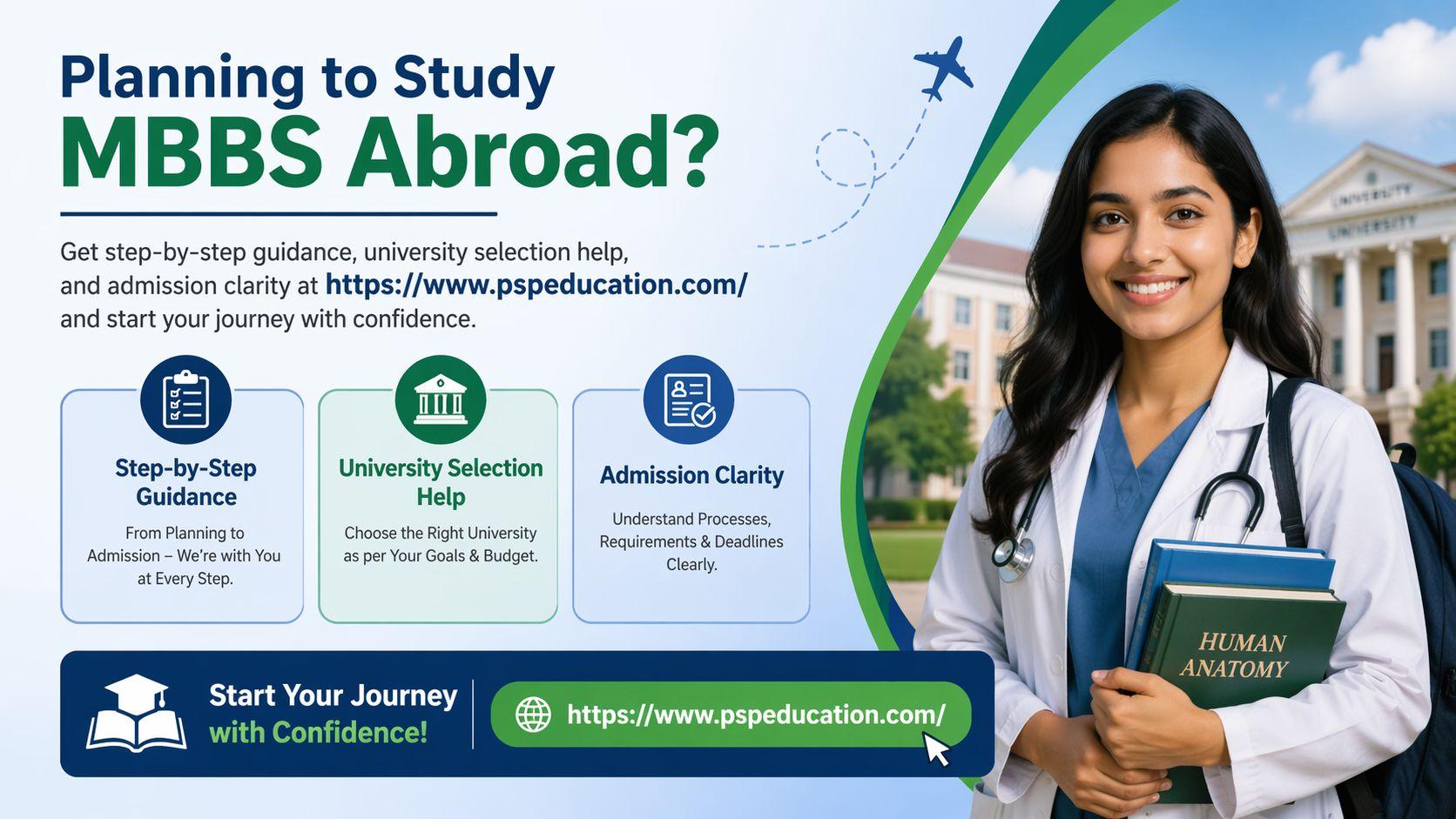
Studying MBBS abroad has become one of the most practical options for Indian students who are unable to secure a medical seat in India. While the opportunity is promising, many students feel confused about how the admission process actually works.
This guide provides a clear, step-by-step explanation of the MBBS abroad admission process so you can move forward with confidence and avoid common mistakes.
Why Understanding the Admission Process is Important
Many students rush into decisions without fully understanding the process. This often leads to issues such as choosing the wrong university, missing deadlines, or facing visa problems.
A structured approach ensures:
-
Smooth admission
-
Proper documentation
-
No unnecessary delays
-
Better decision-making
Understanding each step helps you stay in control of your journey.
Step 1: Research and Decide Your Destination
The first step is selecting the right country and university. This decision should be based on:
-
Budget
-
University recognition (NMC approved)
-
Language of instruction
-
Climate and lifestyle
-
FMGE/NEXT passing rates
Popular countries include Russia, Kazakhstan, Georgia, Kyrgyzstan, and Uzbekistan.
Take your time during this step, as it will impact your entire career.
Step 2: Check Eligibility Criteria
Before applying, ensure you meet the basic requirements:
-
10+2 with Physics, Chemistry, and Biology
-
Minimum 50% marks (40% for reserved categories)
-
NEET qualification
-
Minimum age of 17 years
If you meet these criteria, you are eligible to apply for MBBS abroad.
Step 3: Shortlist Universities
Once you decide your country, shortlist 2–3 universities. This helps you keep backup options in case your first choice is not available.
While shortlisting, consider:
-
Ranking and reputation
-
Fee structure
-
Infrastructure
-
Clinical exposure
Avoid choosing a university based only on low fees.
Step 4: Submit Application
After finalizing the university, you need to submit your application. This usually includes:
-
10th and 12th mark sheets
-
NEET scorecard
-
Passport copy
-
Passport-size photographs
Applications are generally processed quickly, and most universities do not require entrance exams.
Step 5: Receive Admission Letter
Once your application is reviewed, the university will issue an admission letter or offer letter.
This confirms that you have been accepted into the program.
At this stage, you may need to pay an initial admission or seat confirmation fee.
Step 6: Get Invitation Letter
Some countries require an official invitation letter from the university for visa processing.
This document is issued after your admission is confirmed and is an important part of your application.
Step 7: Apply for Student Visa
The next step is applying for a student visa. You will need:
-
Admission letter
-
Invitation letter
-
Passport
-
Medical reports
-
Financial proof
Visa processing time varies by country but usually takes a few weeks.
Step 8: Prepare for Travel
Once your visa is approved, you can start preparing for your journey:
-
Book flight tickets
-
Arrange accommodation (usually provided by the university)
-
Carry essential documents
-
Pack according to climate
Planning in advance ensures a smooth transition.
Step 9: Arrival and University Enrollment
After reaching your destination:
-
Complete university registration
-
Submit original documents
-
Attend orientation sessions
-
Begin your classes
This marks the start of your medical journey abroad.
Common Mistakes to Avoid
Many students face problems due to avoidable mistakes:
-
Choosing non-recognized universities
-
Not checking NMC guidelines
-
Ignoring FMGE passing rates
-
Delaying application process
-
Relying on incomplete information
Avoiding these mistakes can save time, money, and stress.
Importance of Choosing the Right Consultant
While the process may look simple, small errors can create major issues later. This is why proper guidance is important.
A reliable platform like https://www.pspeducation.com/ helps students at every step—from selecting universities to completing admission and visa processes.
With expert support, students can avoid confusion and ensure everything is done correctly.
Timeline for MBBS Abroad Admission
Here’s a general timeline:
-
March–June: Research and university selection
-
June–August: Application and admission
-
July–September: Visa processing
-
September–October: Travel and course start
Starting early gives you more options and less stress.
Documents Checklist
Before applying, keep these documents ready:
-
Academic certificates
-
NEET scorecard
-
Passport
-
Passport-size photos
-
Medical fitness certificate
Having all documents prepared speeds up the process.
Final Thoughts
The MBBS abroad admission process is simple when approached step by step. Unlike India, where competition is extremely high, studying abroad offers a more accessible pathway to becoming a doctor.
However, success depends on making informed decisions. Choosing the right country, selecting a recognized university, and following the correct process are all essential.
With proper planning and the right guidance, your journey to studying MBBS abroad can be smooth, stress-free, and successful.
Take your time, do your research, and move forward with confidence—your medical career starts here.

 English
 Arabic
 French
 Spanish
 Deutsch
 Turkish
 Dutch
Dutch
 Italiano
 Russian
 Romaian
 Portuguese (Brazil)
 Greek
Greek