


How much do Blast-Resistant Windows Cost?
A refinery control room wakes to an alarm: a nearby unloading bay has suffered a BLEVE-style fuel release and a repeat blast risk exists until the area is isolated. Engineers running the emergency response need to know whether occupied rooms and viewing façades have the right protective glazing. The immediate question from site leadership is practical: how much will replacing standard glazing with blast-rated units cost, and what drives that price?
A blast window is a performance-specified glazed opening engineered to reduce damage from explosive overpressure while maintaining visibility and environmental control. In industrial, defence, and critical infrastructure contexts, understanding blast window cost drivers is as important as understanding performance metrics — both determine whether upgrades are feasible and fit the facility’s risk tolerance. This article explains what a blast window is, why costs vary, and how to evaluate investment value.
What a blast window system is
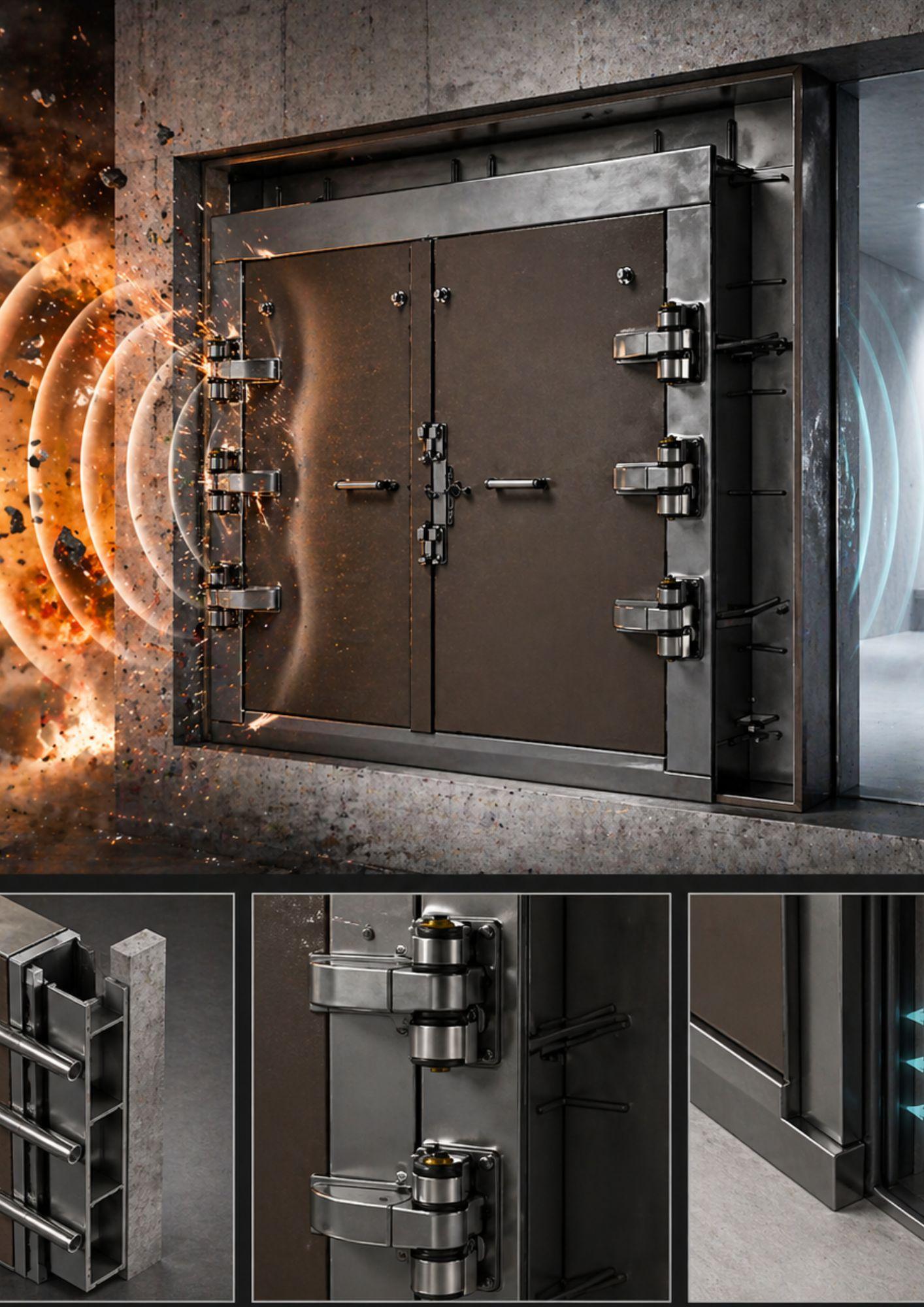
A blast window system combines laminated or composite glazing, high-performance interlayers, and a reinforced frame with engineered anchors. The assembly is tested or analytically rated for a blast load (peak overpressure and impulse) and for fragment retention. Unlike ordinary insulated glass units, blast-resistant glass and frames are designed to deform controllably and remain attached under dynamic loading.
How blast windows work
Blast-resistant glazing uses layered glass and polymer interlayers (PVB, ionoplast, or specialized elastomers) to convert impact energy into controlled deformation. Frames distribute dynamic loads into the supporting structure through engineered anchors. The interplay between glazing stiffness, interlayer ductility, and frame strength defines system behaviour under a pressure wave.
Key engineering and material factors
-
Blast window design: required rating (e.g., 0.5 bar for short durations vs. higher pressures) dictates thickness, laminate count, and frame specification.
-
Glass technologies: laminated glass, heat-strengthened or tempered plies, and polycarbonate options for high-deflection requirements.
-
Frame systems: steel or reinforced aluminium frames with specified anchor patterns and backing structure reinforcement.
-
Energy absorption mechanisms: staged failure, interlayer shear capacity, and controlled glazing retention.
Key features to evaluate
-
Blast resistance and certified ratings.
-
Impact resistance and fragment retention capability.
-
Structural reinforcement and anchor design.
-
Laminated glazing systems and interlayer type.
-
Pressure-wave mitigation through controlled deflection.
-
Corrosion resistance and weather sealing for long-term durability.
-
Energy efficiency via insulated units and thermal breaks.
-
Low maintenance and long service life under industrial conditions.
Applications
Blast windows are applied where human life and critical equipment must be preserved:
-
Military and defence installations
-
Ammunition depots and ordnance storage
-
Oil & gas plants and petrochemical facilities
-
Power generation plants and control rooms
-
Data centres and server halls
-
Government buildings and embassies
-
Industrial control rooms and critical infrastructure sites
Cost and investment factors (what really influences price)
Rather than a single price, blast window cost is a function of technical requirements and site integration complexity. Primary drivers:
-
Blast rating requirements: higher peak pressures and longer duration impulses require thicker, more complex laminates and stronger frames.
-
Glazing specifications: number of plies, interlayer material, and whether polycarbonate is required affect material cost.
-
Frame design complexity: custom frames, thermal breaks, and corrosion protection add fabrication time and cost.
-
Structural reinforcement: retrofits often need backing plates, reinforced mullions, or local wall strengthening.
-
Compliance and testing: independent laboratory certification, witnessed tests, and factory quality control inflate costs but are essential for EEAT.
-
Installation complexity: scaffolding, sequencing in live facilities, and coordination with structural contractors increase labour and schedule costs.
-
Manufacturing precision: bespoke sizes and tight tolerances increase lead times and price.
-
Long-term maintenance planning: replaceable inner-lites, spare parts, and maintenance contracts affect lifecycle cost.
Buyer’s guide: selecting suppliers
When evaluating blast resistant window manufacturers, prioritise:
-
Demonstrated blast engineering expertise and in-house analysis capability.
-
Independent test data and compliance certifications to recognised standards.
-
Proven manufacturing quality and project references in similar facilities.
-
Customisation ability and clear technical documentation.
-
Installation support, structural integration guidance, and after-sales maintenance.
-
Local supply chains or reliable exporters (look for established blast window manufacturers in India if regional support matters).
Common mistakes to avoid
-
Choosing solely on initial cost without lifecycle or risk analysis.
-
Ignoring blast-load calculations tailored to site-specific threats.
-
Replacing glazing without assessing frame and anchor adequacy.
-
Accepting unverified claims without independent test reports.
-
Overlooking maintenance accessibility and future upgrade paths.
Where to start
For owners assessing an upgrade or new build, begin with a risk assessment and blast-load analysis. Engage early with manufacturers who combine engineering analysis and fabrication capability so system design and structural integration are considered together. For small protective roles such as a residential or on-site office upgrade, evaluate specialist solutions described for a blast window for home to understand scaled applications and requirements: Blast window for home.
Conclusion
There is no single “blast window price” — cost is driven by required blast rating, glazing complexity, frame and anchor design, structural reinforcement, testing, and installation conditions. Treat the purchase as an engineered safety system: specify performance, demand independent verification, and account for lifecycle maintenance. A correctly specified blast window reduces risk to occupants and assets, supports regulatory compliance, and strengthens infrastructure resilience — a prudent investment in facility safety and continuity.

 English
 Arabic
 French
 Spanish
 Portuguese
 Deutsch
 Turkish
 Dutch
Dutch
 Italiano
 Russian
 Romaian
 Greek
Greek